

What motivates me and how I work
I am a teacher. Through my work, I have learned how important relationships, language and trust are. I am interested in how people with different languages, cultures and values live together. For me, integration is a journey with ups and downs. Many people experience powerlessness and a feeling of not knowing how to move forward. Vulnerability and pain are part of who we are. They can help us get through difficult situations.
In my art, I speak only from my own experiences. Every person is unique. I cannot know what others feel, have experienced or are currently going through. That is why conversation between people is so important.
In my art, I speak only from my own experiences. Every person is unique. I cannot know what others feel, have experienced or are currently going through. That is why conversation between people is so important.
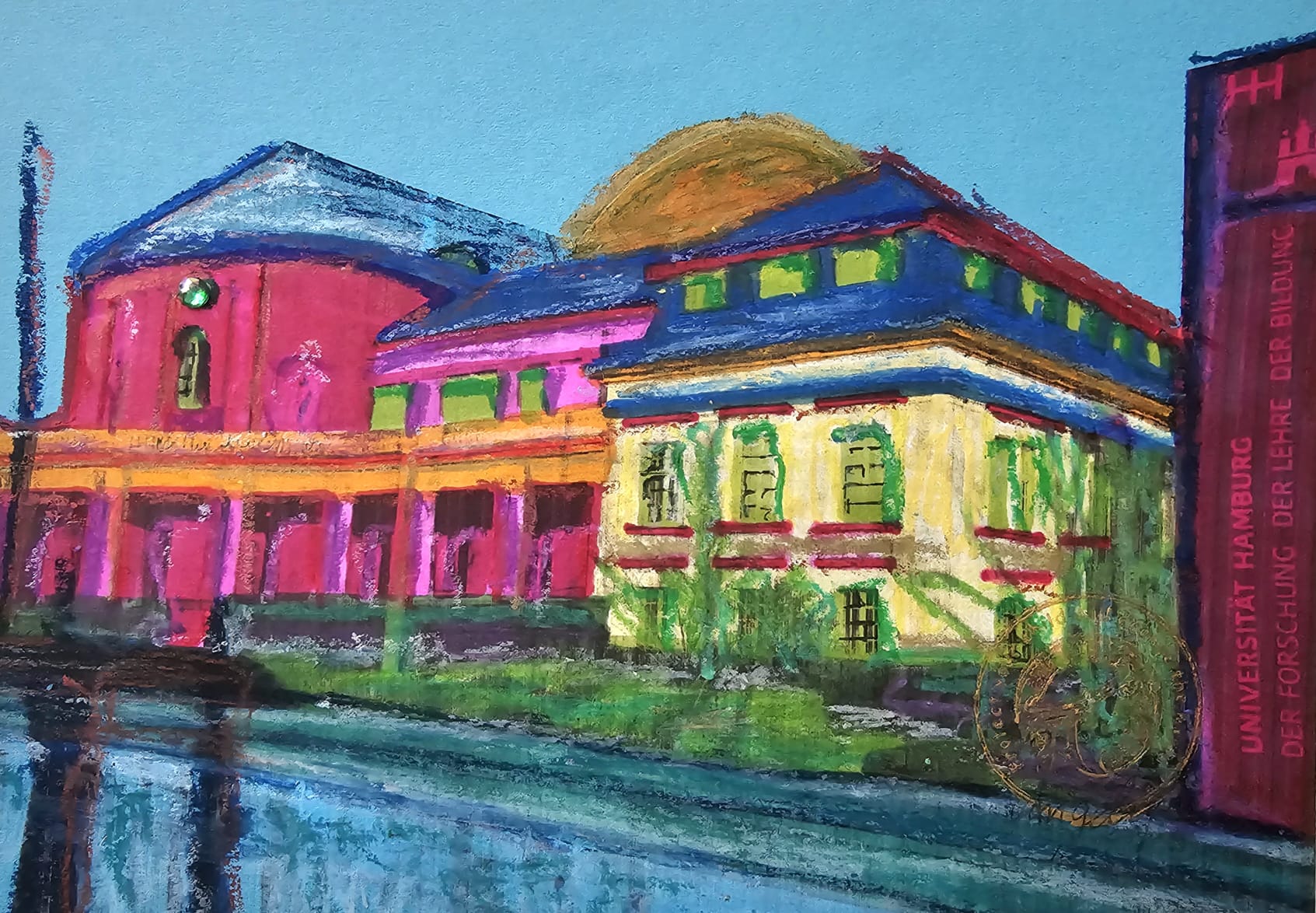

هَلْ نَحْنُ مُخْتَلِفُونَ حَقَّاً أَمْ أَنَّنَا لَمْ نَتَعَلَّمْ بَعْد التَحَدُّثَ بِنَفْسِ اللُّغَةْ؟
Are we really that different, or have we simply not yet learnt to speak a common language?
This question weighs heavily on my mind. In 2015, a year marked by increased immigration of people seeking refuge and whilst I was in the midst of a personal crisis, I found myself asking some fundamental questions.
How can one find oneself, especially in a different country, in a different culture? Who am I, who do I want to become, who can I actually become, and where do my limits lie? What does the path to that look like, and what obstacles and challenges must be overcome?
Sitting there deep in thought with a friend, we talked about it. Laughing, she threw a cushion at me and said: “You know, you’re so intellectual – why don’t you just study it?” I looked at her in astonishment. “You’re mad – how on earth are you supposed to study that?” I asked.
“I’ve no idea – you’ll find your own way, and when you do, perhaps others can follow your lead. You’re creative – how about art?”
Overwhelmed and full of questions, I began to search for an answer. Inspired by Martin Buber’s “Through the ‘You’ I become the ‘I’”, I embarked on an active, conscious exploration involving a wide variety of people, conversations, books, seminars and experiences.
After eight years of creative chaos, I’ve found my own path.
An attempt to create art that is constructive, appreciative and unifying. My hope is that it will stimulate conversation, foster closeness and bring people together.
How can one find oneself, especially in a different country, in a different culture? Who am I, who do I want to become, who can I actually become, and where do my limits lie? What does the path to that look like, and what obstacles and challenges must be overcome?
Sitting there deep in thought with a friend, we talked about it. Laughing, she threw a cushion at me and said: “You know, you’re so intellectual – why don’t you just study it?” I looked at her in astonishment. “You’re mad – how on earth are you supposed to study that?” I asked.
“I’ve no idea – you’ll find your own way, and when you do, perhaps others can follow your lead. You’re creative – how about art?”
Overwhelmed and full of questions, I began to search for an answer. Inspired by Martin Buber’s “Through the ‘You’ I become the ‘I’”, I embarked on an active, conscious exploration involving a wide variety of people, conversations, books, seminars and experiences.
After eight years of creative chaos, I’ve found my own path.
An attempt to create art that is constructive, appreciative and unifying. My hope is that it will stimulate conversation, foster closeness and bring people together.

Inner child, interculturality and social sculpture
I am a state-certified educator with additional qualifications as a specialist in inclusion and integration. In my daily work with children, families and teams, I have come to understand relationships, communication and trust as the cornerstones of human interaction. This is true in moments of connection, as well as in situations of uncertainty or exclusion. I am currently studying Islamic Studies and Art History at the University of Hamburg. I am particularly interested in interculturality and the question of how belonging arises. I am fascinated by how people encounter each other and how we interact with each other in these encounters.